Sports robots are easy to judge by a fast clip and hard to judge by useful results. Without measured trials, named teams, dates, or machine specifications, there is no sound way to rank the field.
That leaves a better question for now: what proof should a sports robot provide before anyone calls it better?
- Watch the full run: Check for cuts, resets, or remote control.
- Measure the task: Record time, errors, falls, and recovery.
- Check the setting: A lab floor and a sports field test different skills.
Speed is only one part of the test
A robot built for sport may need to run, turn, stop, and recover after contact. Each task loads the robot in a different way, so a single top speed says little about play on a real court or field.
The useful number is task speed. A timed lap shows movement over distance. A pass or shot test shows control.
Each result should include the surface, load, battery state, and number of attempts. That detail matters because robots can perform very differently on rubber, grass, loose dirt, or polished flooring. A machine that runs well on one surface may slip, stall, or use far more power on another.
Control makes the difference
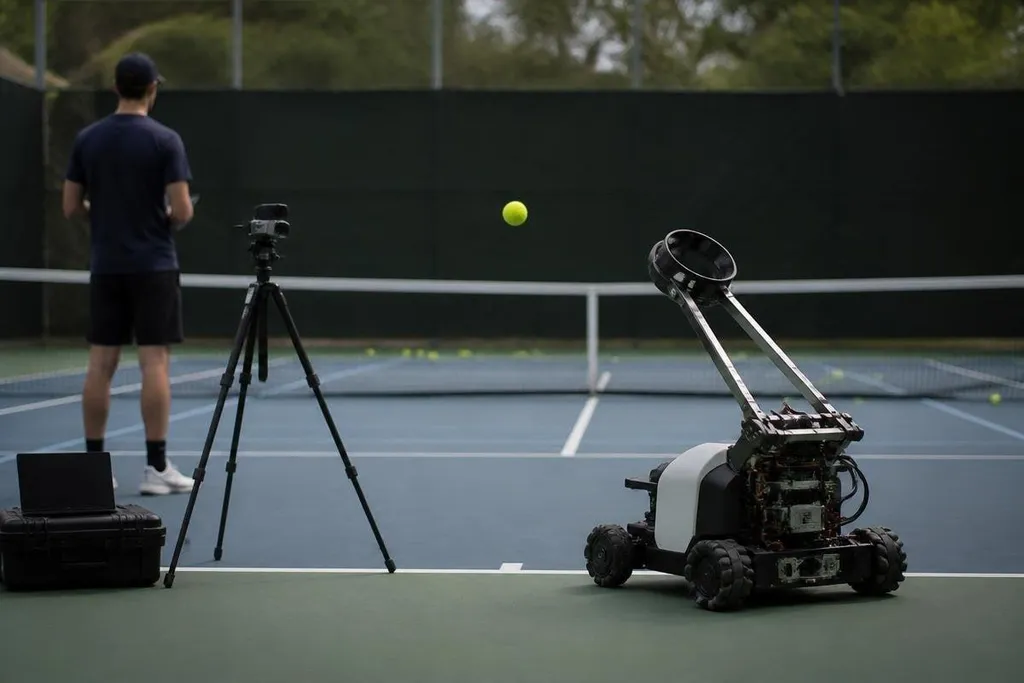
Sports robots need a control system that joins camera input, force readings, and motor movement. The system must detect a change, choose a response, and move before the task has passed.
For a legged robot, balance is part of every movement. The robot must place its feet, control joint torque, and keep its body inside a safe position. For a wheeled robot, steering and braking matter more than gait, but contact with another machine still tests the same control loop.
A good trial should state how much of the action comes from software and how much comes from a person. Teleoperation means a person sends movement commands from a distance. It can show what the hardware can do, but it doesn't prove that the robot can play on its own.
A clean sports clip can hide the operator, software version, test date, and failed attempts. A dated report from Robot24 can tie the robot’s movement to its control method, test setting, and recorded result. That record leads into the next check: whether the video shows the full run or only the best few seconds.
The video needs a full record
A short clip can prove that a robot completed one movement. It can't prove repeatability, safety, or performance over a full session. Those claims need a longer record with failed attempts included.
Look for the start and end of the test, the camera position, control inputs, and any pause between attempts. A clip that cuts before a handoff leaves the hardest part untested. The same applies to a robot that appears to run alone while a hidden operator controls its next step.
Teams should publish the task rules as well. The distance, object weight, allowed contact, scoring method, and number of runs should be clear. Without those details, two results may use the same sport but measure different tasks.
What the race should measure
A useful sports robot must survive more than one good run. It needs a record that shows repeat work, safe behavior, and the cost of fixing failures.
I'd trust a slower robot with open test data before a faster robot shown only in edited clips.
Use this checklist when a team publishes a new result:
- Task rules: Can another team repeat the test?
- Control method: Did software run the robot, or did a person guide it?
- Repeat runs: Are failed attempts and recovery times listed?
- Surface and load: Does the report name the floor, weather, object, and battery state?
- Repair needs: Does one fall bend a link, damage a sensor, or stop the test?
- Cost: Report the robot price, or state that only the result is available.
Those points also show what remains unproven. A robot may run fast in a controlled trial and still need frequent resets, careful floor checks, or a technician beside the field.
The next useful result won't be a faster clip. It will be a dated test record with full runs, clear rules, failure counts, and enough detail for another team to repeat it.